
What a party is
A party is a private game for you and the people you invite. One person starts it and shares its code or link, the others join from their own screens, and a game can start once two or more players are ready.
Anyone can host a party for up to 4 people, host included, and joining is always free. You can start one from the party page.
What you play once everyone is in is the interesting part. The party modes are quite different games, and the right one depends on who is in the room.
Game Show and Sprint: two kinds of race
- Game Show: everyone answers the same question at the same time, and answering faster scores more.
- Sprint: everyone races through the same questions at their own pace, and harder ones are worth more.
Game Show is the one most people picture when they hear “trivia night”, and it’s free. The whole group sees a question together, which means the whole group groans together too. It has a Steal option, where only the first person to answer correctly scores.
Sprint takes away the waiting. Nobody sits through someone else’s thinking time, so it suits groups where a few people are much faster than the rest.
Clock: a time bank that drains
In Clock, everyone has a time bank that drains as they play. Right answers add time, wrong answers lose it, and the last person left wins.
It’s the mode with the most nerves in it. You can be well ahead and still go out after two quick mistakes, and the questions get harder as the match runs. Good for groups that like a knockout.
Curveball: you pick someone else’s question
Curveball shows you another player and four questions, and you pick which one they have to answer. Someone else is choosing yours.
It turns what you know about your friends into the game. Does your brother know anything about opera? You’re about to find out. It’s at its best with people who know each other well, and it gets loud.
Conviction: answer, look around, change your mind
In Conviction you answer in secret, then see what everyone else picked and can change your mind.
The second look is the whole game. If four people chose the other answer, are they right or are they all making the same mistake? Every question becomes a small debate, which is why it works so well on a voice call.
Its options change the mood. Punish makes changing to a wrong answer cost you, so following the crowd isn’t free. Anonymous shows how many people went where, but never who.
Mirror: guess what another player chose
Mirror asks two things. First you answer the question. Then you guess which answer another player chose.
So it rewards knowing people as much as knowing facts. With a close friend, the wrong answers are often the easy ones to predict.
Seal: hide an answer and hope they miss
In Seal, one player hides an answer and is paid for everyone they make get it wrong. Everybody else either trusts the hidden one or picks from what is left. Players take it in turns to do the hiding.
It’s a bluffing game as much as a trivia game. Did they hide the right answer, or are they hoping you’ll think so?
Reverse Trivia: pick the question
In Reverse Trivia, everyone sees an answer and picks the question it belongs to. Answering faster scores more.
It plays like Game Show turned inside out, and it’s a good change for a group that has played a lot of Game Show.
Higher or Lower and Bullseye: rounds about numbers
- Higher or Lower: two cards and two numbers, and you call whether the second one is higher or lower than the first. In a party it’s played as Game Show, Sprint or Survival.
- Bullseye: everyone sees the same fact and types a number. The closer your guess, the more you score, and the reveal shows every guess.
Number rounds are kind to mixed groups. Nobody needs the exact figure, only a feel for it, and a wild guess in Bullseye gets a bigger laugh than a wrong answer anywhere else.
The three ways to play Higher or Lower are explained in the guide to Higher or Lower game modes.
Co-op: one team against the clock
Co-op puts everyone on the same side. The team works through one shared pool of questions against a clock, choosing which ones to take on. Harder cards are worth more, and a wrong answer burns that question for good.
That last rule is where the teamwork comes from. If the geography question is worth a lot and you’re not sure, leave it for the person who is. It’s the mode for families, for work teams and for any group where a scoreboard would spoil the evening.
Tournament: one-on-one bouts
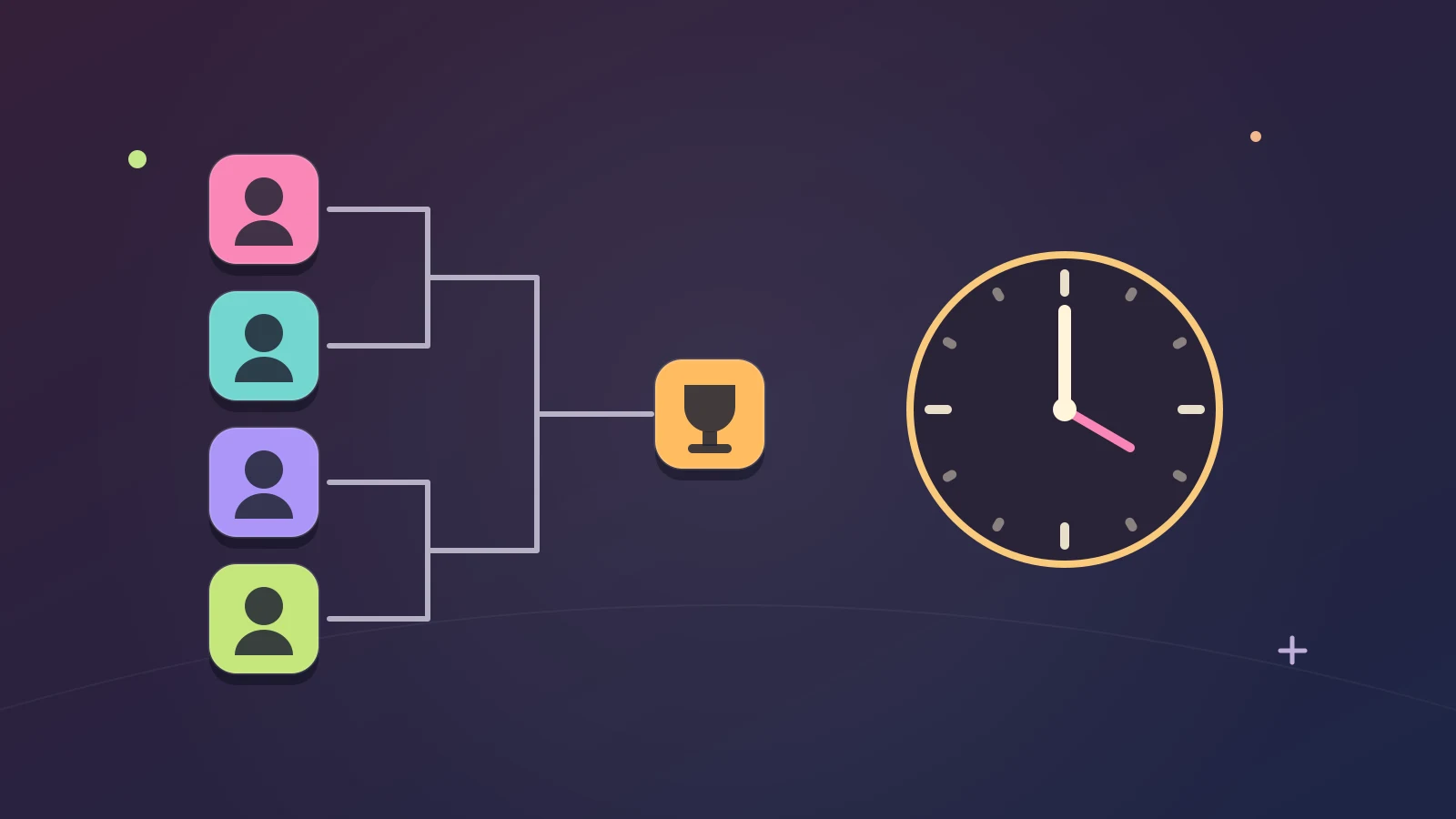
- Swiss rounds and finals: everyone plays a set of rounds against players with similar records, and the table then seeds the semifinals and final.
- Double elimination: a first loss drops you into the lower bracket, and a second loss puts you out.
Tournament is made of one-on-one Game Show bouts, and the leader chooses one of these two formats. An exact tie in a bout continues into sudden death.
Swiss rounds keep everyone playing for longer, so they’re the friendlier choice. Double elimination has the drama of a bracket and still forgives one bad bout.
Which party modes are free
Game Show is free. The other party modes need one player in the party with Premium. It doesn’t have to be the host.
Each day, one of the other party modes is free for everyone.
When one player in the party has Premium, the party also holds up to 10 people. In Discord, 10-player trivia games are free to play, and the Discord trivia page has the steps.
In Party, a Day Pass costs $0.99 for 12 hours of Premium, shared with your party while you are together. It is offered on the website, in desktop Discord and in the Android app.
Pick a mode for your group
- A group that’s new to this: Game Show.
- A group with one trivia expert: Co-op, or Curveball so everyone can aim at the expert.
- Close friends or family: Mirror and Curveball.
- People who like to argue: Conviction and Seal.
- A competitive group with time to spare: Tournament.
- A group that doesn’t think it likes trivia: Bullseye or Higher or Lower.
Every party mode has its own settings, so the leader can shape a round to the group: how many questions, how long people get to answer, and options like Steal.
For a whole evening, start with Game Show on subjects everyone knows, play Co-op so the group wins or loses something together, bring in Conviction or Seal once people are talking, and finish with a Tournament.
Where to go next
For the hosting side, from invites to subjects, there’s a guide to an online trivia night with friends and one for a Discord game night.
Only two of you? There’s a guide to two-player trivia online as well.
Tidbit is for ages 13 and above.
By the team making Tidbit. Questions or a correction? Get in touch.